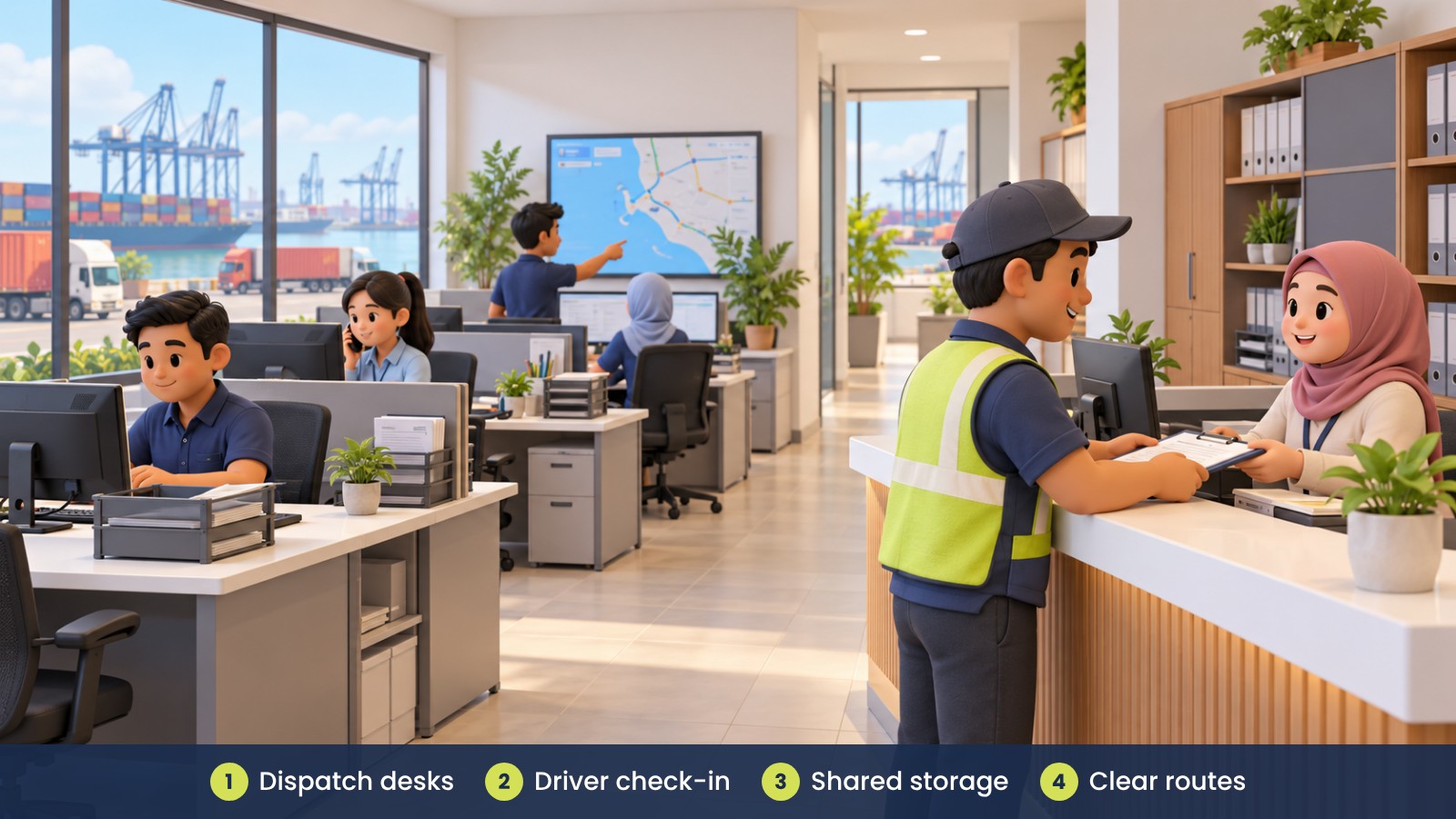
A logistics office works best when dispatch staff, drivers and administrators can move between tasks without getting in one another’s way. For teams in Port Klang, Klang and Shah Alam, plan clear zones for daily coordination, paperwork, storage and driver check-ins before selecting furniture.
Key Takeaways
- Plan the office around the flow of dispatch work and driver visits.
- Keep a clear route between the entrance, workstations and shared areas.
- Choose desks and chairs to suit the tasks people do for much of the day.
- Give forms, devices and shared supplies an organised home.
- Review the layout with dispatch staff and drivers before finalising it.
The 2-minute version
- List the people and tasks that use the office each day.
- Mark where staff work, where drivers check in and where information is shared.
- Plan furniture and storage around the movement between these areas.
- Keep walkways, doors and shared access points clear.
- Check that the proposed layout works during a busy dispatch period.
What areas does a logistics company office need?
The right layout depends on how your operation works. A small dispatch team may share a compact office, while a busier site may need separate places for coordination, paperwork and driver check-ins.
Begin by mapping the everyday journey through the office: who comes in, where they need to go, what they collect or leave, and which tasks need a quiet or focused area. This can reveal where furniture or storage may cause bottlenecks.
| Office zone |
Purpose |
Furniture to consider |
| Dispatch work area |
Coordinate daily work and update information |
Workstations, task chairs and suitable storage |
| Driver check-in point |
Help visitors find the right person or desk |
Small counter or clear sign-in surface, if needed |
| Paperwork and supplies |
Keep frequently used materials organised |
Filing cabinets, shelves or shared storage |
| Briefing area |
Support short team discussions |
Meeting table or a shared standing surface |
| Circulation route |
Let staff and drivers move through the office |
Clear floor space around furniture and access points |
How should you plan dispatch desks and driver areas?
Place dispatch workstations where staff can coordinate with one another without making the entrance a through-route for every task. If drivers need to visit the office, consider a clearly visible check-in point so they do not have to walk through the whole work area to find help.
Think about the items people carry or use. Clipboards, delivery documents, handheld devices and shared stationery should have practical storage. Keep frequently used items easy to reach, while avoiding piles on desks or along walkways.
| Planning question |
What to review |
Possible furniture response |
| Where do drivers enter? |
Entrance visibility and visitor movement |
Visible check-in surface or visitor chair |
| Where does dispatch work happen? |
Team communication and desk needs |
Workstations arranged for coordination |
| What needs to be kept close? |
Forms, devices and shared supplies |
Nearby cabinets, drawers or shelves |
| Where do short briefings happen? |
Team size and frequency of discussions |
Compact meeting table or shared surface |
What furniture suits a busy logistics office?
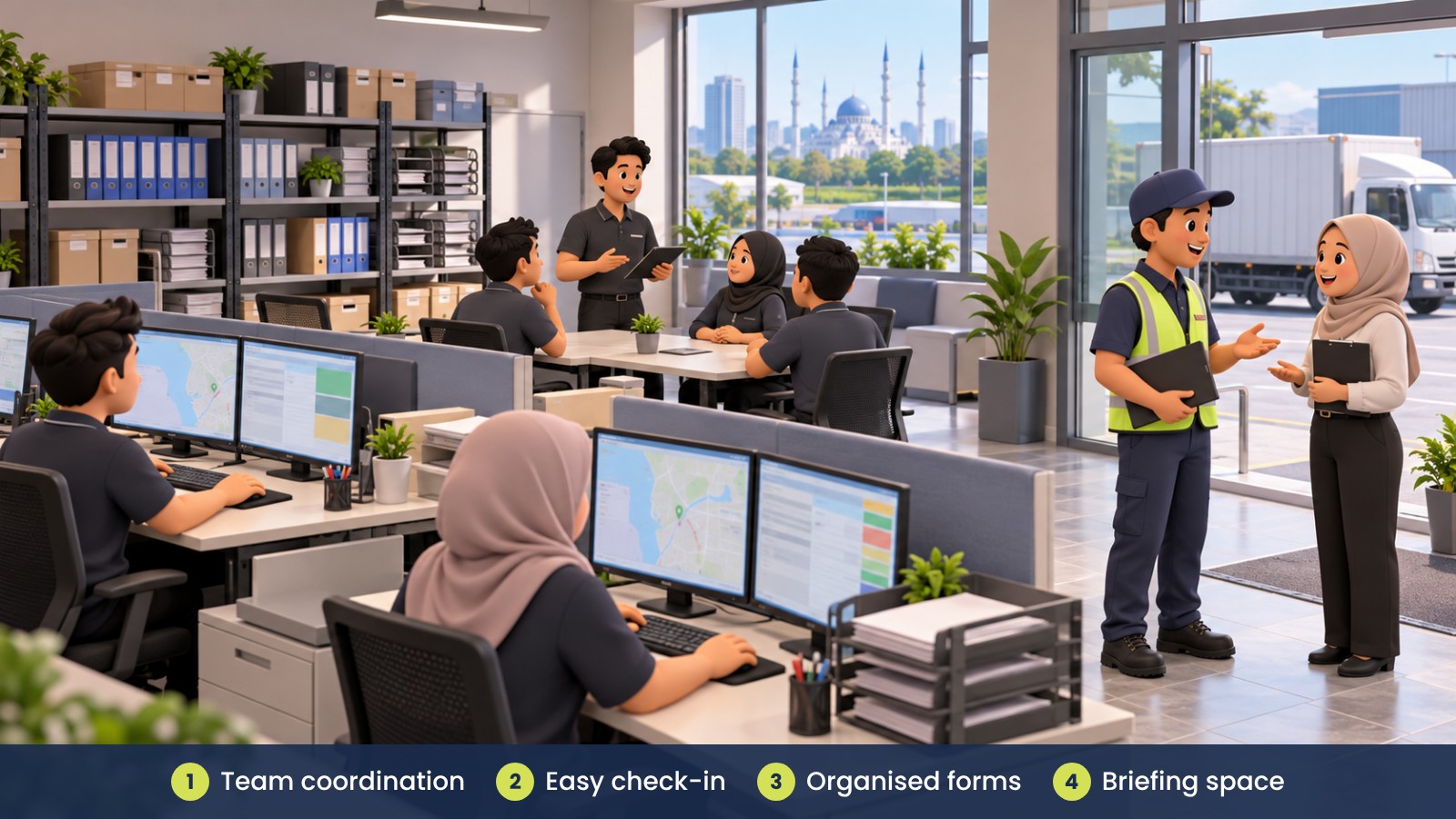
Choose desks and chairs around the work people do and how long they use each workstation. A shared dispatch area may need practical surfaces, organised storage and enough room for people to work without crowding each other.
Durable, easy-to-maintain furniture may be useful in a busy operational setting. Before buying, check the dimensions, finish and storage capacity against your actual space and daily routines. Avoid choosing furniture only by appearance if it does not support the work.
How can you keep the layout flexible?
Logistics operations can change as teams, processes or storage needs change. Modular desks and movable storage can make it easier to adjust the office without starting the layout again from scratch.
Leave room for practical additions, but avoid buying furniture for every possible future scenario. A measured layout and a clear list of current needs help keep the setup useful and manageable.
Lower-carbon choices for a logistics office
- Reuse desks, chairs or cabinets that still suit the work and fit the layout.
- Choose modular furniture that can be rearranged if dispatch needs change.
- Consider durable and repairable pieces to help reduce replacement cycles.
- Order quantities around real staffing and storage needs.
- Ask suppliers what material information and end-of-life options they can share.
For more practical ideas, read Office Furniture Carbon Footprint: A Practical Buyer’s Guide.
Fictional example: a dispatch office in Port Klang
Fictional example: a logistics team in Port Klang finds that drivers often walk between desks looking for the right contact. The team reviews the entrance and creates a clear check-in point, then moves shared paperwork into nearby storage. The change makes the office easier to navigate during busy periods.
Common mistakes when setting up a logistics office
- Putting driver check-ins inside the middle of the dispatch work area.
- Leaving shared paperwork and devices without an assigned storage place.
- Choosing desks before checking room dimensions and access points.
- Allowing furniture or temporary items to narrow the main route.
- Planning only for quiet periods instead of checking the layout at busy times.
What can go wrong?
A layout that does not reflect the flow of work can create interruptions and unnecessary movement. Drivers may be unsure where to go, while dispatch staff may lose workspace to shared items. Reviewing the route and furniture plan with the people who use the office can help reduce these everyday issues.
How can iGreen help?
iGreen can help review your logistics office, plan dispatch and driver areas, and select desks, chairs and storage to suit the space. We support projects around Port Klang, Klang and Shah Alam, with space planning, furniture supply, delivery and installation in KL and Penang.
Request a site assessment from iGreen.
Frequently asked questions
What furniture does a logistics office need?
Common items include workstations, chairs, storage and a suitable place for driver check-ins or short briefings. The right selection depends on your team size and daily workflow.
How should a dispatch office be arranged?
Plan around the movement of dispatch staff, drivers and shared paperwork. Keep check-in easy to find, work areas practical and routes through the office clear.
How can a logistics office keep paperwork organised?
Assign shared forms and supplies to suitable cabinets, shelves or drawers near the people who use them. This can help reduce desk clutter and time spent looking for items.
Can modular furniture work for a logistics office?
Modular furniture can be useful when teams or work processes may change. Check that the pieces fit the current layout and can be adjusted if your needs change later.
Prepared by iGreen Office Furniture