An executive office should support focused work, private conversations and comfortable meetings without feeling oversized or difficult to maintain. For companies in Kuala Lumpur, KL Sentral, Bangsar South and Petaling Jaya, start with how the room will be used, then select furniture to suit the space and the people who visit it.
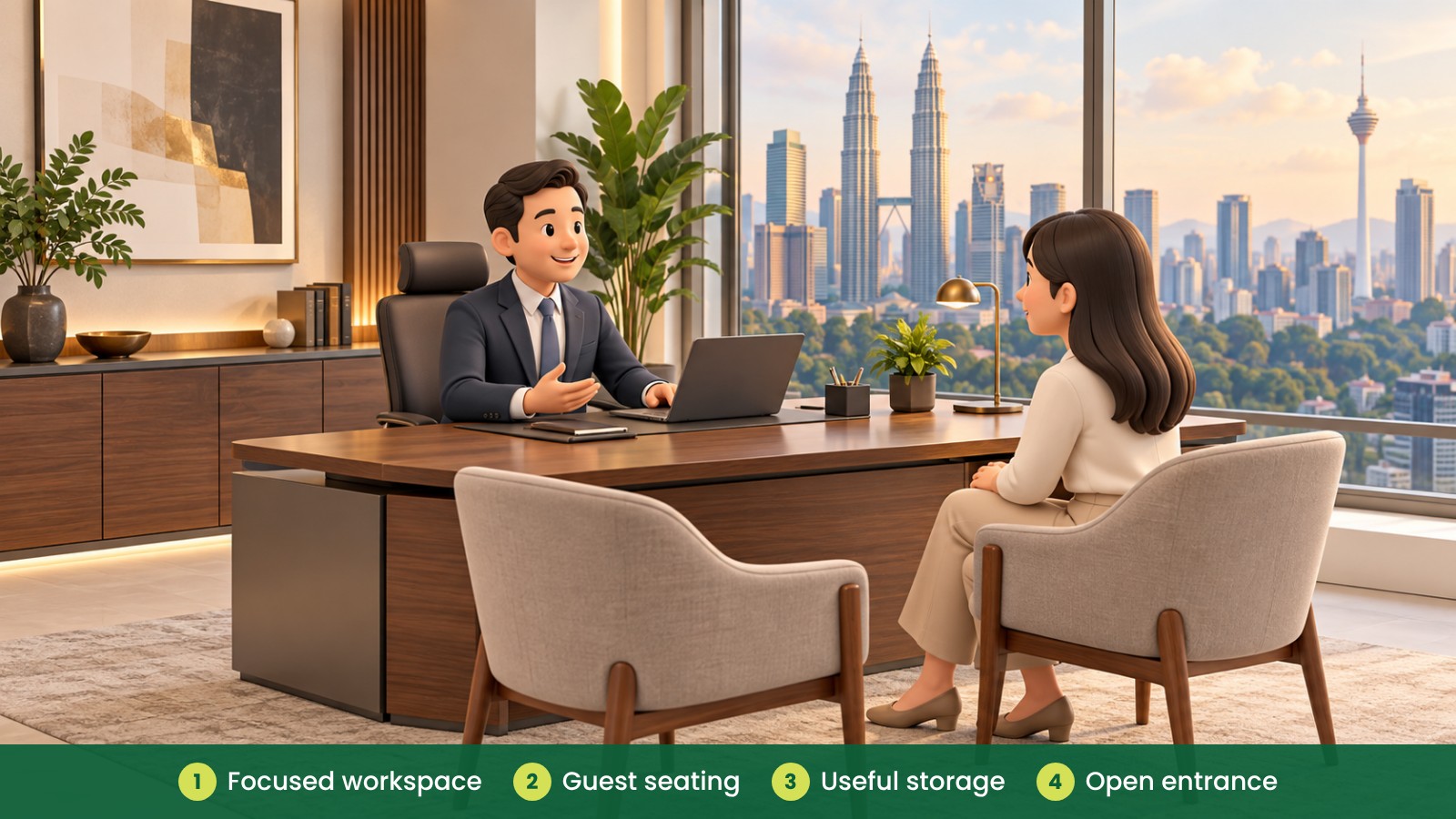
Key Takeaways
- Plan the room around work, meetings and storage needs.
- Measure carefully so the desk and guest seating fit comfortably.
- Choose a desk, chair and storage that suit daily use, not just appearance.
- Keep visitor movement and access to the door clear.
- Use a consistent furniture style that fits the wider office.
The 2-minute version
- Decide what happens in the room: focused work, meetings or both.
- Measure the room, entry and window positions.
- Select a desk and chair suited to the user and available space.
- Add guest seating and storage only where they serve a clear purpose.
- Review the full layout before confirming furniture selections.
What should an executive office include?
A director’s room often combines a main desk with guest seating and storage. Some rooms also need a small meeting table or a private discussion area. The right mix depends on the room size, the work performed there and how often colleagues or visitors come in.
Before choosing furniture, list the activities the room needs to support. This helps you balance personal workspace, guest seating and storage without filling the room with pieces that are rarely used.
| Room zone |
Purpose |
Furniture to consider |
| Main work area |
Support focused work and daily tasks |
Desk, office chair and task lighting if required |
| Guest seating |
Host short conversations or visitors |
Two visitor chairs or a small sofa set |
| Meeting area |
Hold small internal discussions |
Compact meeting table and chairs, if needed |
| Storage area |
Keep documents and work items organised |
Cabinet, credenza or shelving |
How do you choose a desk and chair for a director’s room?
Choose a desk with enough surface for the user’s daily work and equipment, while leaving space for visitors to move around. A larger desk is not automatically better if it makes the room feel crowded or reduces access to storage.
For the chair, consider adjustability, support and how it will be used throughout the day. A practical office chair can help the user find a comfortable working position. Check its dimensions and movement area against the proposed desk and room layout.
| Furniture item |
What to check |
Planning prompt |
| Executive desk |
Work surface, storage and room fit |
What needs to stay on the desk each day? |
| Office chair |
Adjustability, comfort and movement space |
How many hours is it used? |
| Guest chairs |
Comfort and access around the desk |
How many visitors usually meet here? |
| Cabinet or credenza |
Storage capacity and door clearance |
What needs to be stored within reach? |
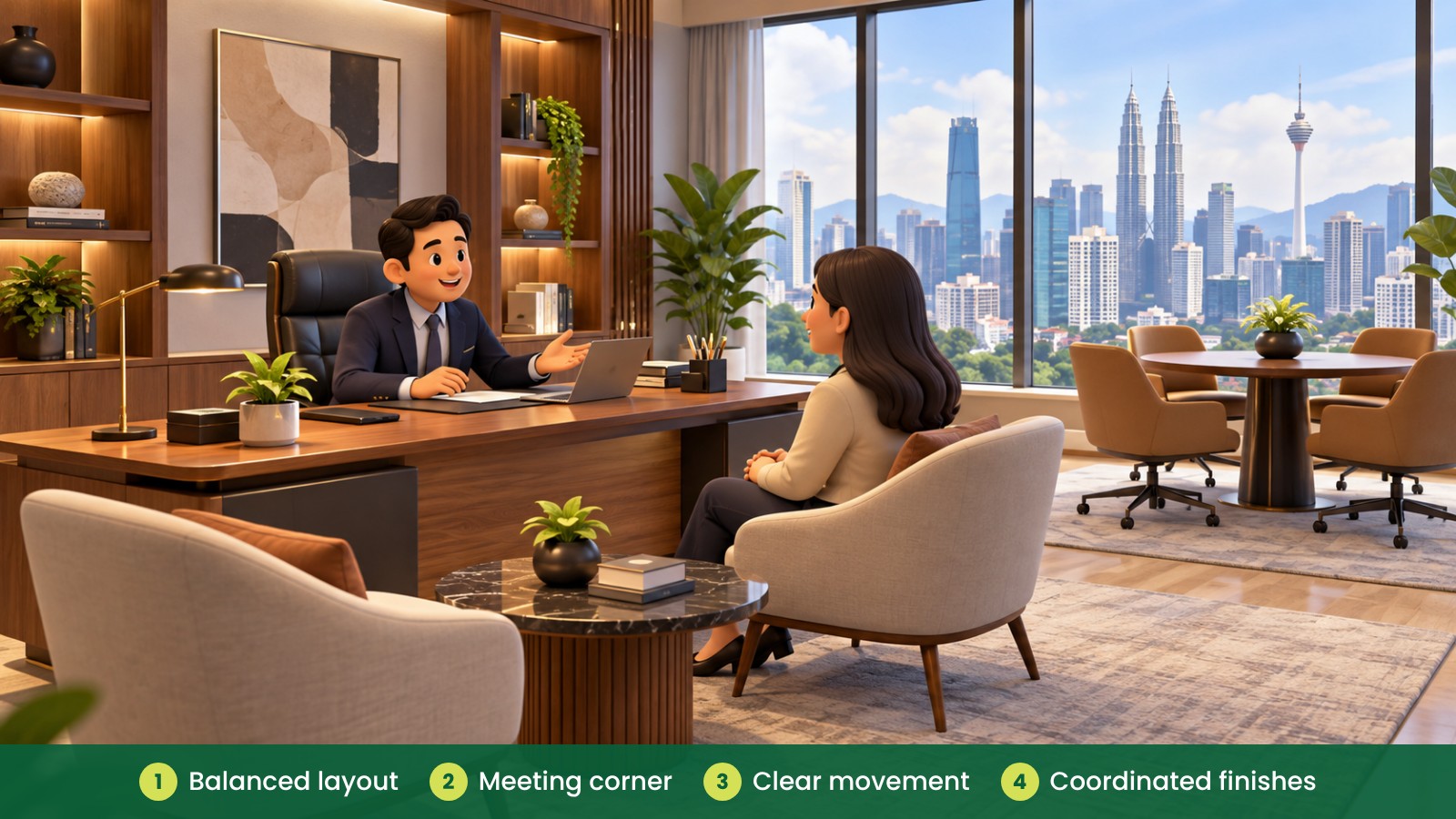
How can you make the room feel professional and welcoming?
Use a coordinated set of finishes and furniture shapes that fits the wider workplace. A room can feel polished without adding unnecessary furniture or decorative pieces. Consider the visual balance between the desk, guest seats and storage.
Think about the visitor’s experience too. Make the entrance easy to navigate, position guest seating where people can sit comfortably, and keep personal or work items from spilling into shared space.
How much storage does an executive office need?
Base storage on what the user actually keeps in the room. Digital workflows may reduce the need for large filing cabinets, while some roles still need space for documents, reference materials or presentation items.
Measure storage before ordering and check how doors or drawers open. If the room is compact, a credenza or cabinet may provide useful storage without dominating the space.
Lower-carbon choices for an executive office
- Reuse a suitable desk or cabinet if it fits the new room and remains useful.
- Choose durable, repairable furniture to help reduce replacement cycles.
- Consider modular pieces that can be moved or reconfigured later.
- Order only the guest seating and storage the room needs.
- Ask suppliers what material information and end-of-life options they can provide.
For more ideas, see Office Furniture Carbon Footprint: A Practical Buyer’s Guide.
Fictional example: a director’s office near KL Sentral
Fictional example: a company near KL Sentral wants to refresh a director’s room before a team expansion. The facilities team measures the room, keeps a cabinet that still fits and replaces only the desk and chair. It also checks guest seating positions so meetings do not block the entrance.
Common mistakes when planning an executive office
- Choosing a large desk before checking the room dimensions.
- Adding guest seating that blocks the door or reduces movement space.
- Prioritising a formal look over daily comfort and practical use.
- Adding storage without checking what needs to be kept in the room.
- Selecting furniture that does not fit the wider office environment.
What can go wrong?
Furniture that is too large can make the room harder to move through and use for meetings. Too little storage can leave documents and equipment on work surfaces, while too many decorative pieces can make daily upkeep more difficult. A measured plan helps balance appearance and function.
How can iGreen help?
iGreen can help plan executive offices and director rooms, recommend desks, chairs, guest seating and storage, and coordinate furniture supply, delivery and installation. We support office projects in Kuala Lumpur, KL Sentral, Bangsar South and Petaling Jaya, with services in KL and Penang.
Request a site assessment from iGreen.
Frequently asked questions
What furniture does an executive office need?
A typical setup may include a desk, office chair, guest seating and storage. Add a meeting table only if the room and work needs justify it.
How should I arrange a director’s office?
Place the desk and guest seating so people can enter, sit and move around comfortably. Measure the room and check door clearance before confirming the furniture layout.
What is a practical desk size for an executive office?
It depends on the room, equipment and work habits. Measure the available space and list what the user needs on the desk before choosing a size.
How can an executive office feel professional without being crowded?
Use a coordinated furniture selection, keep only useful items in the room and leave clear space around the desk and seating. A simple layout can still feel polished and welcoming.
Prepared by iGreen Office Furniture