For a Penang factory office, a year-end furniture upgrade works best when it solves a real day-to-day problem. Before using any remaining budget, review what staff need, what can be reused and which improvements will still be useful next year.
Key Takeaways
- Start with a short list of practical issues staff experience now.
- Check existing furniture before deciding what to replace.
- Prioritise frequently used work areas and shared spaces.
- Confirm product availability, site access and installation arrangements with suppliers.
- Choose flexible furniture that can remain useful as teams or layouts change.
The 2-minute version
- Ask staff and facilities teams what is not working well.
- Review desks, chairs, storage and meeting areas already in use.
- Measure the space and identify the most useful improvements.
- Confirm the order scope, stock position and site arrangements.
- Keep suitable items in use and plan how new furniture can adapt next year.
How should you use a remaining office furniture budget?
Use the remaining budget to address a clear need, not simply to place an order before the year ends. Common priorities include worn or unsuitable chairs, storage that no longer fits the workflow, crowded workstations or a meeting area that does not support the team.
For Penang MNC factory teams, useful upgrades may be spread across an admin office, supervisor area or shared meeting space. Facilities and procurement teams can make the review easier by listing the problem, the people affected and the furniture that could address it.
A short, defined scope also helps when asking suppliers to quote. Include the area, approximate quantities, preferred furniture types and any site requirements you already know. Confirm the approved budget process and purchasing cut-off internally before placing an order.
What should you check before ordering?
Check existing furniture first. A chair may still be suitable after adjustment or repair; desks or cabinets may work in a different part of the office. This can free the budget for items that genuinely need replacement.
Then confirm the practical details with the supplier. Ask whether the selected items are available, what the quotation includes and what information is needed to plan delivery and installation. If the office is inside a factory or a managed site, check access arrangements and the preferred installation window with the relevant facilities team.
| Review area |
Questions to ask |
Possible next step |
| Workstations |
Do desks and chairs suit current tasks and users? |
Adjust, rearrange or replace selected items |
| Storage |
Are shared items easy to store and find? |
Reposition cabinets or review storage needs |
| Meeting areas |
Does the furniture suit the way teams meet? |
Review the table, seating and layout |
| Site arrangements |
What access or installation details should be confirmed? |
Coordinate with facilities and the supplier |
Which upgrades are likely to stay useful next year?
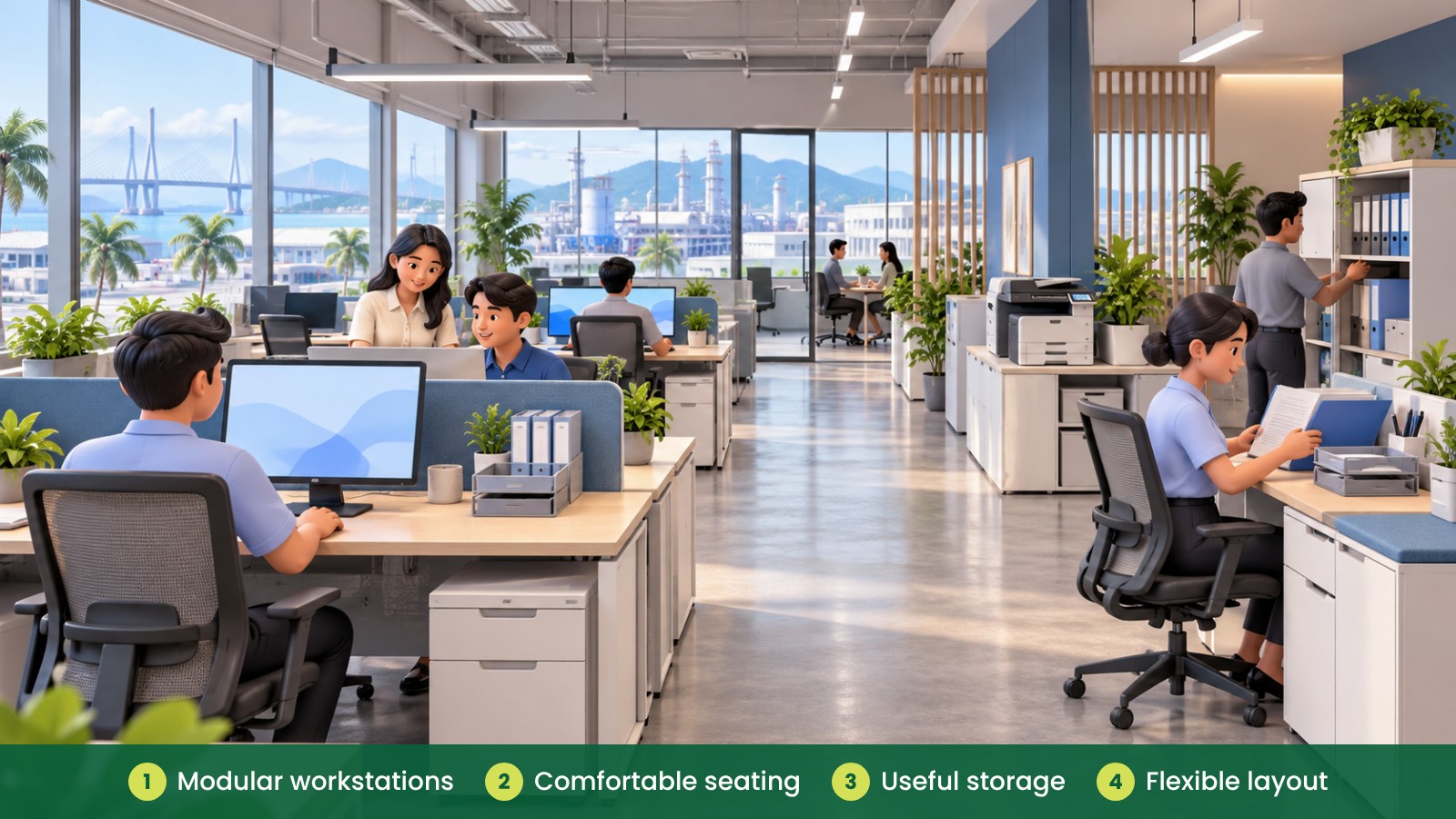
Consider needs that will continue beyond the year-end period: seating used daily, practical storage, workstations that suit regular tasks or a flexible meeting area. Avoid buying furniture for a temporary arrangement unless you have a clear plan for how it will be used afterwards.
If the team expects changes, modular or movable furniture may give you more options for rearranging the space later. Check dimensions and layout before ordering so additions do not make walkways or shared areas harder to use.
Lower-carbon choices under ESG pressure
Many organisations are being asked to explain the environmental choices they make, including how they buy and manage workplace furniture. A year-end upgrade can support a more considered approach by keeping useful furniture in service and making new purchases fit a clear need.
- Reuse desks, chairs and cabinets that remain in suitable condition.
- Repair or rearrange furniture where that addresses the problem.
- Choose modular pieces that can be reconfigured if teams or layouts change.
- Order only the quantities needed for the planned work areas.
- Ask suppliers what material information and reuse or end-of-life options they can provide.
Fictional example: a factory office in Bayan Lepas
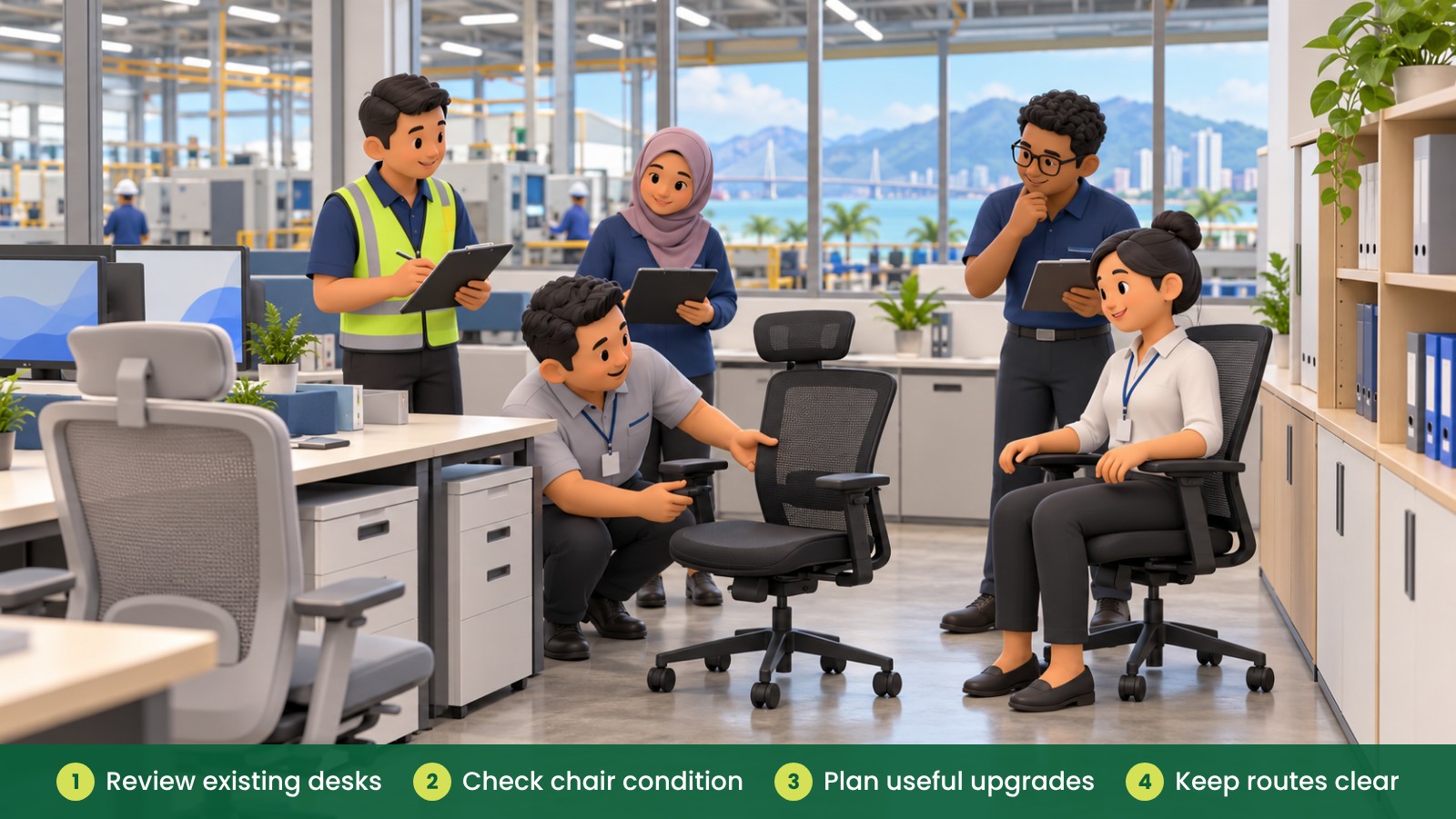
Fictional example: a facilities team in Bayan Lepas reviews its year-end office needs after staff raise concerns about worn chairs and crowded shared storage. The team checks which cabinets can be reused, prioritises replacement seating for regular workstations and confirms site arrangements before asking for a final quotation.
Common mistakes when using a year-end budget
- Buying furniture just to use the remaining budget.
- Replacing items without checking whether they can be repaired or reused.
- Ordering before measuring the area and confirming quantities.
- Assuming every product is available or can be installed by a preferred date.
- Overlooking how the new furniture will fit next year’s layout.
What can go wrong?
A rushed order can leave you with furniture that does not fit the space or solve the problem staff raised. Unconfirmed availability or site arrangements may also disrupt planning. A short needs review and supplier check can help make the purchase more useful after year-end.
How can iGreen help?
iGreen can help review your office furniture needs, plan practical upgrades and identify items that may be reused or rearranged. We can discuss office and factory projects in Bayan Lepas and Batu Kawan, then confirm the available furniture and project arrangements for your site.
Share your requirements with iGreen through /contact-us.
Frequently asked questions
What should a factory office upgrade include?
Start with the areas that need attention, such as workstations, seating, storage or a shared meeting space. Select furniture based on how staff use each area.
Should we replace all our office furniture before year-end?
Not necessarily. Review the condition and suitability of existing furniture first. Keep, repair or rearrange items that still meet the team’s needs.
When should we confirm a year-end furniture order?
Check your internal purchasing cut-off and ask the supplier about product availability and site arrangements as early as you can. Confirm the details for the specific items and location.
How can we make an office upgrade more flexible?
Measure before ordering and consider modular furniture that can be rearranged if team sizes or work patterns change.
Prepared by iGreen Office Furniture