This article is general guidance, not legal advice.
Classroom furniture should suit the students, teaching activities and way the room is used every day. Before buying, check fit, durability, storage, classroom layout, delivery access and how easily staff can keep the space organised.
Key Takeaways
- Choose desks and chairs for the age group and activities, not just the room’s appearance.
- Check furniture dimensions and allow students and teachers to move around comfortably.
- Consider durability, stability, edges, materials and maintenance as part of the buying review.
- Plan storage, teacher areas and shared equipment alongside student seating.
- Ask staff to review samples or a proposed layout before confirming a larger order.
The 2-minute version
- Define the users: note student age groups, class sizes and teaching activities.
- Measure the room: include doors, windows, storage, teaching areas and movement paths.
- Check furniture fit: compare desk and chair sizes with the users and room layout.
- Review quality and care: ask about materials, maintenance, warranty and replacement parts.
- Confirm delivery details: check quantities, access routes, installation and the handover process.
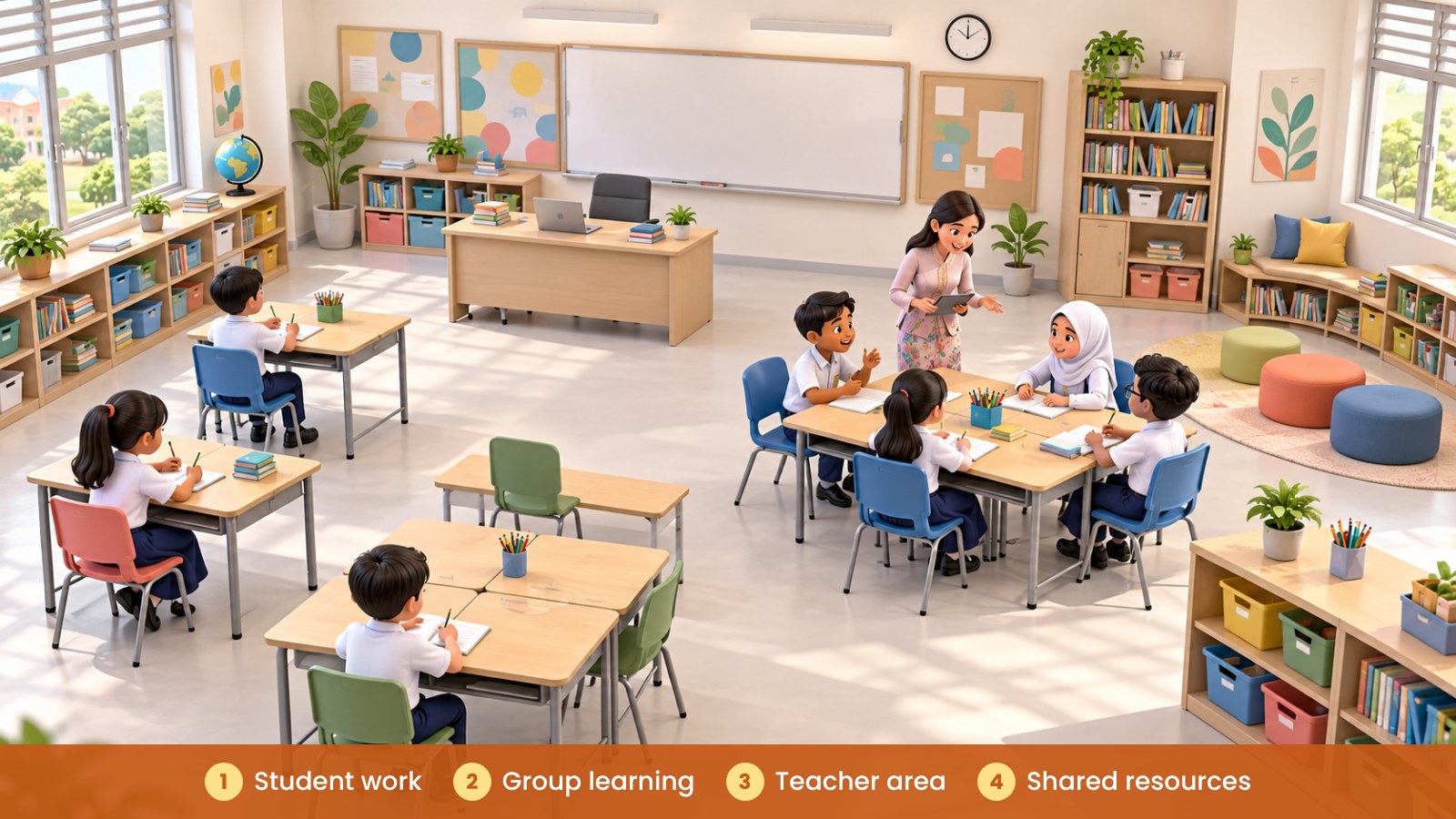
What should a school check before buying classroom furniture?
Start with how the classroom is used. A room for younger students may need different furniture proportions and storage from a room used for older students, computer lessons, group work or practical activities.
List the number of users, the types of lessons and the equipment that needs a place. Consider where teachers stand or move, where students work in groups, and how the room is reset between classes.
Will the desks and chairs suit the students?
Compare furniture dimensions with the age group and the school’s intended use. If several age groups share the room, consider how furniture will work for the full range of users. Where possible, invite teachers or school staff to review samples before making a bulk decision.
Check whether chairs can be moved and stored easily, and whether desk surfaces suit books, worksheets, devices or group activities. Furniture that is too large for the room can make movement awkward; furniture that is too small for the task can leave materials crowded.
Ask the supplier what dimensions are available and whether replacement items can be matched later. Keeping a record of the selected model, finish and size can make future additions easier to coordinate.
| Classroom area |
What it supports |
Furniture to consider |
| Student learning |
Individual reading, writing and device use |
Student desks and chairs suited to the age group |
| Group activity |
Team tasks and classroom discussion |
Tables that can be rearranged, movable chairs |
| Teacher area |
Lesson preparation and classroom materials |
Teacher desk, storage and a practical work chair |
| Shared resources |
Books, stationery and teaching materials |
Shelves, cabinets or labelled storage bins |
| Device use |
Lessons using computers or shared equipment |
Suitable desks, equipment storage and cable planning |
How should the classroom layout support different activities?
Not every lesson uses the room in the same way. A layout that works for a class discussion may need to change for individual tasks or group projects. Consider whether tables can be moved and whether there is a clear place to store items that are not in use.
Mark the main movement paths on a simple floor plan. Check that students and teachers can reach doors, teaching areas and shared storage without squeezing between furniture. Include the space needed to pull out chairs and use cabinets.
A flexible layout can be useful, but only if the furniture is practical to move and reset. Ask staff how often the room changes arrangement and who will manage those changes.
How can a school compare furniture quality?
Ask for clear product information, including dimensions, materials, care instructions, warranty coverage and the process for replacement parts. Review the information against how heavily the room will be used and how the school expects to maintain the furniture.
Check the overall construction and finish. Look for stable furniture, smooth and finished edges, and surfaces that staff can clean using the school’s normal cleaning process. Confirm suitable care instructions with the supplier rather than assuming every surface can be cleaned in the same way.
For a larger purchase, request a sample or arrange to see similar furniture in person. A sample allows staff to check proportions, finish, usability and whether the furniture suits the room before the school commits to a larger quantity.
| Buying check |
What to ask |
Why it helps |
| Dimensions |
What sizes and seat heights are available? |
Helps match furniture to users and room layout. |
| Materials |
What are the main materials and care instructions? |
Helps staff plan everyday upkeep. |
| Durability |
What warranty applies, and how are issues handled? |
Clarifies the supplier’s support after delivery. |
| Replacement |
Can the same model or parts be ordered later? |
Helps with future additions and repairs. |
| Delivery |
What access, installation and site preparation are needed? |
Reduces the chance of delays or access problems. |
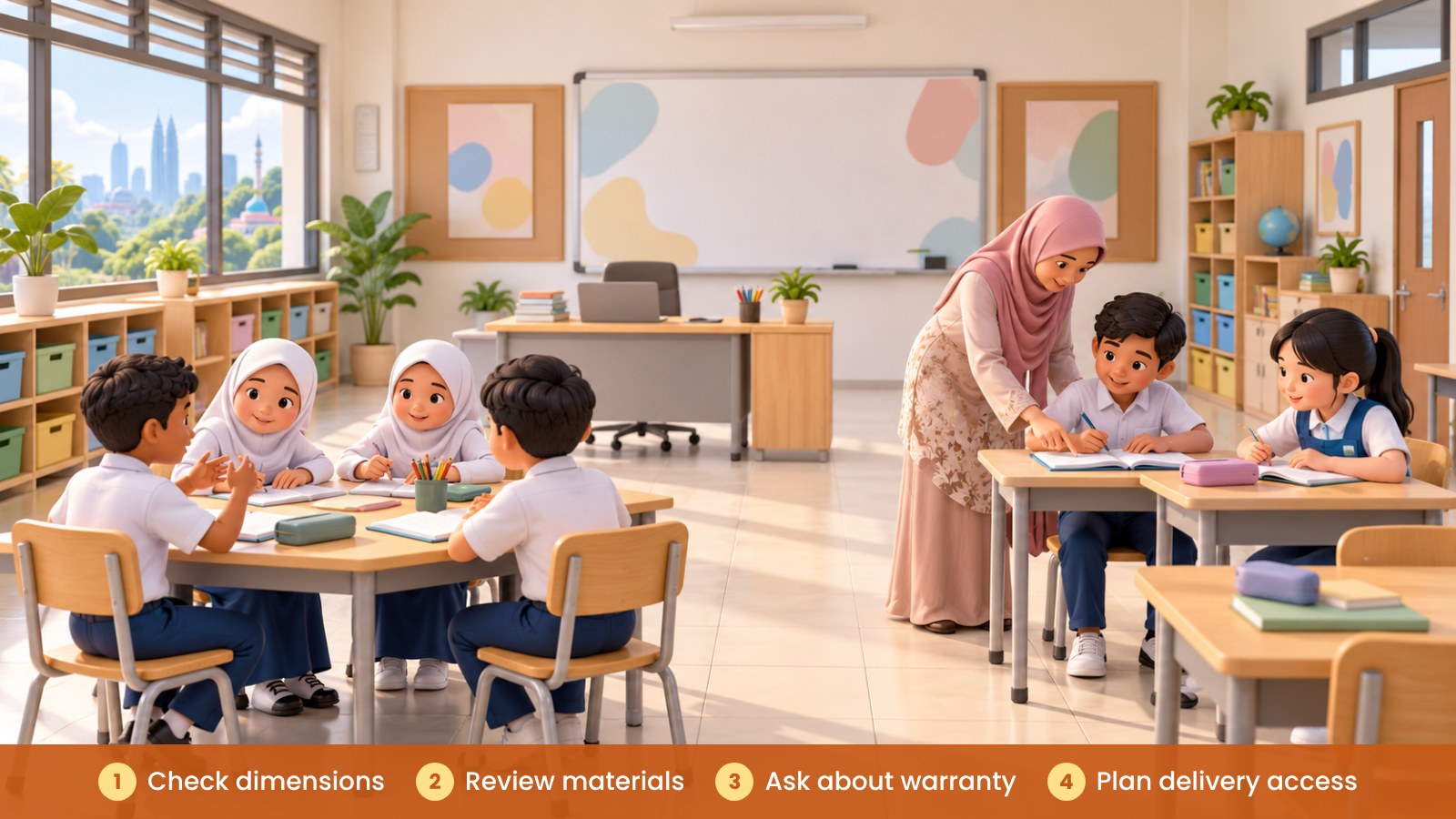
What should schools plan for storage and maintenance?
Classroom clutter often grows when books, teaching materials and personal items do not have an assigned place. Decide what needs to stay in the room, who uses it and where it belongs. Use shared storage that staff and students can understand and maintain.
Keep the most frequently used materials accessible and place less-used items elsewhere where practical. Avoid adding cabinets that narrow movement paths or reduce useful teaching space. If the school already has storage, check whether it can be reused before ordering more.
Ask the supplier for routine care instructions and clarify how warranty or repair requests are handled. This gives the school a clear process for looking after furniture and reporting problems.
How can you make delivery and installation easier?
Confirm the number of classrooms, furniture quantities, delivery locations and any preferred installation sequence. Check the route from the loading area to the classroom, including lifts, stairs, corridors and doors. Tell the supplier about access restrictions or school scheduling needs before delivery is arranged.
For a short overview of workplace safety context in Malaysia, see OSHA for Offices in Malaysia. This article focuses on practical furniture planning; schools should check site-specific arrangements with their own facilities team.
Fictional example: a school in Penang refreshes two classrooms
A fictional Penang school is replacing worn furniture in two classrooms used by different year groups. Before requesting a quotation, the school lists the class sizes, lesson activities, existing storage and delivery access for each room.
Teachers review a sample desk and chair, then compare the layout options on a floor plan. The school keeps some existing shelves, selects furniture suited to the room’s users and schedules delivery when staff are available to check the quantities and placement.
What common mistakes should schools avoid?
- Choosing by appearance alone: compare dimensions, usability, materials and care instructions.
- Ordering before measuring: include doors, storage, teaching areas and chair movement in the plan.
- Using one size for every classroom: review the users and activities in each room.
- Adding storage without checking the layout: avoid cabinets that crowd useful space or movement paths.
- Skipping sample review: let staff assess furniture before a larger purchase where possible.
- Leaving delivery planning late: confirm access, quantities, installation and school schedules early.
How can iGreen help schools plan classroom furniture?
iGreen can help assess a site, plan classroom layouts and select suitable desks, chairs and storage. A site assessment can help the school review room measurements, furniture quantities and delivery access before confirming the plan. iGreen supports projects in Kuala Lumpur and Penang, including delivery and installation.
Request a site assessment from iGreen (KL and Penang).
Frequently asked questions
Should schools buy classroom furniture in one standard size?
That depends on the age groups, room use and available space. Review dimensions for each classroom and consider whether different users need different furniture sizes.
What should a school ask about classroom furniture materials?
Ask for the material details, care instructions, warranty information and replacement options. This helps staff understand how the furniture should be maintained.
Is movable classroom furniture always better?
It can help when rooms change between activities, but only if staff can move and reset it easily. Consider how often the classroom changes layout and who will handle that task.
Should we request a sample before a bulk order?
For a larger purchase, a sample can help staff review size, finish and usability before ordering for multiple rooms.