A factory break room or canteen needs furniture that suits the way employees use it between shifts and during meal breaks. In Penang, planning for real staff routines at sites in Bayan Lepas, Batu Kawan and Kulim can help you choose practical tables, chairs and storage.
Key Takeaways
- Plan for how many employees may use the space at the same time.
- Choose furniture that is stable, easy to arrange and straightforward to maintain.
- Keep seating, tables and circulation areas suited to the room and its users.
- Use practical storage for personal items and shared supplies where needed.
- Review furniture condition and layout regularly instead of replacing everything by default.
The 2-minute version
- Observe the routine: check how employees use the room across different break periods.
- Measure the space: account for doors, walkways, serving areas and furniture.
- Choose furniture: compare table and chair options for stability, usability and upkeep.
- Plan the arrangement: make it easy for staff to sit, move through the room and return furniture to place.
- Review and maintain: check what needs repair, replacement or rearrangement over time.
What should a factory break room or canteen include?
Start with the purpose of the room. Some spaces are mainly for meals; others may also be used for short breaks, informal discussions or storing personal belongings.
Think about who uses the space and when. A factory near Bayan Lepas, Batu Kawan or Kulim may have several teams using shared facilities at different times. The layout should make the room straightforward to use without relying on one assumed routine.
Check the available floor area, entrances, serving points and existing fixtures before selecting furniture. Leave practical routes through the room and consider how chairs will be moved when people sit down or leave.
| Zone |
Purpose |
Furniture to consider |
| Dining area |
Meals and shared breaks |
Tables and chairs suited to the room size |
| Serving area |
Collecting food and returning items |
Serving counter or nearby surface, if needed |
| Short-break area |
Brief rest between work periods |
Simple seating that is easy to arrange |
| Personal storage |
Keeping belongings organised |
Lockers or designated storage |
How should you choose tables and chairs for shift workers?
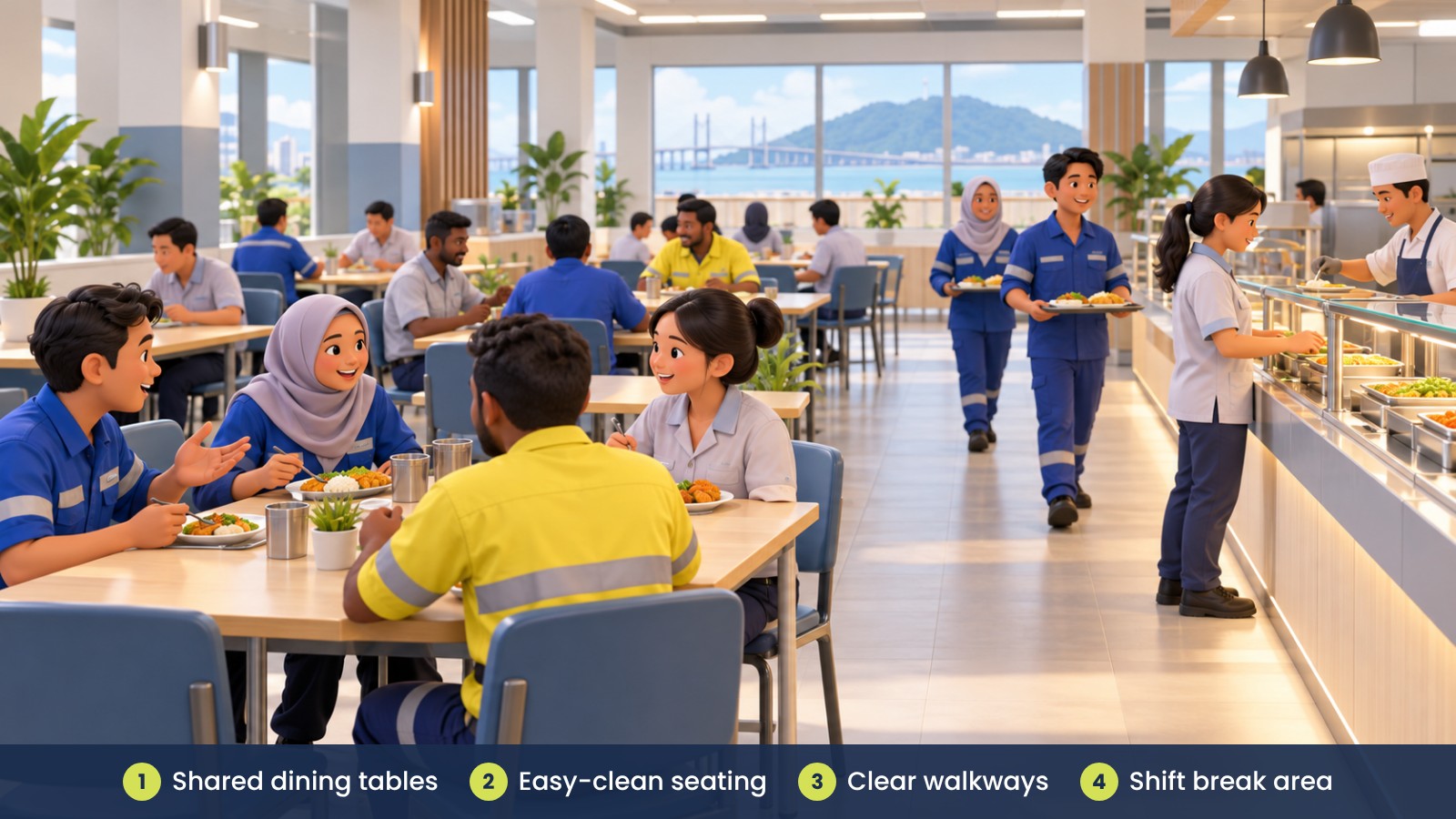
Consider how the furniture will be used throughout the day. Staff may arrive in groups, use the room briefly or need a place to sit during different break periods. Observe the actual pattern and use it to guide the layout.
Check table height, chair size and stability in person where possible. Furniture should suit the people who will use it and fit comfortably within the space. If the room serves a range of users, gather feedback before making a larger purchase.
For teams searching for office furniture in Penang, the product selection is only part of the decision. Check delivery access, installation arrangements and how the furniture can be maintained after it is in use.
How can you make the room easier to maintain?
Ask about the surfaces and construction of the specific furniture you are considering. Choose options that can be cleaned using the methods appropriate for your facility, and check the supplier’s care guidance.
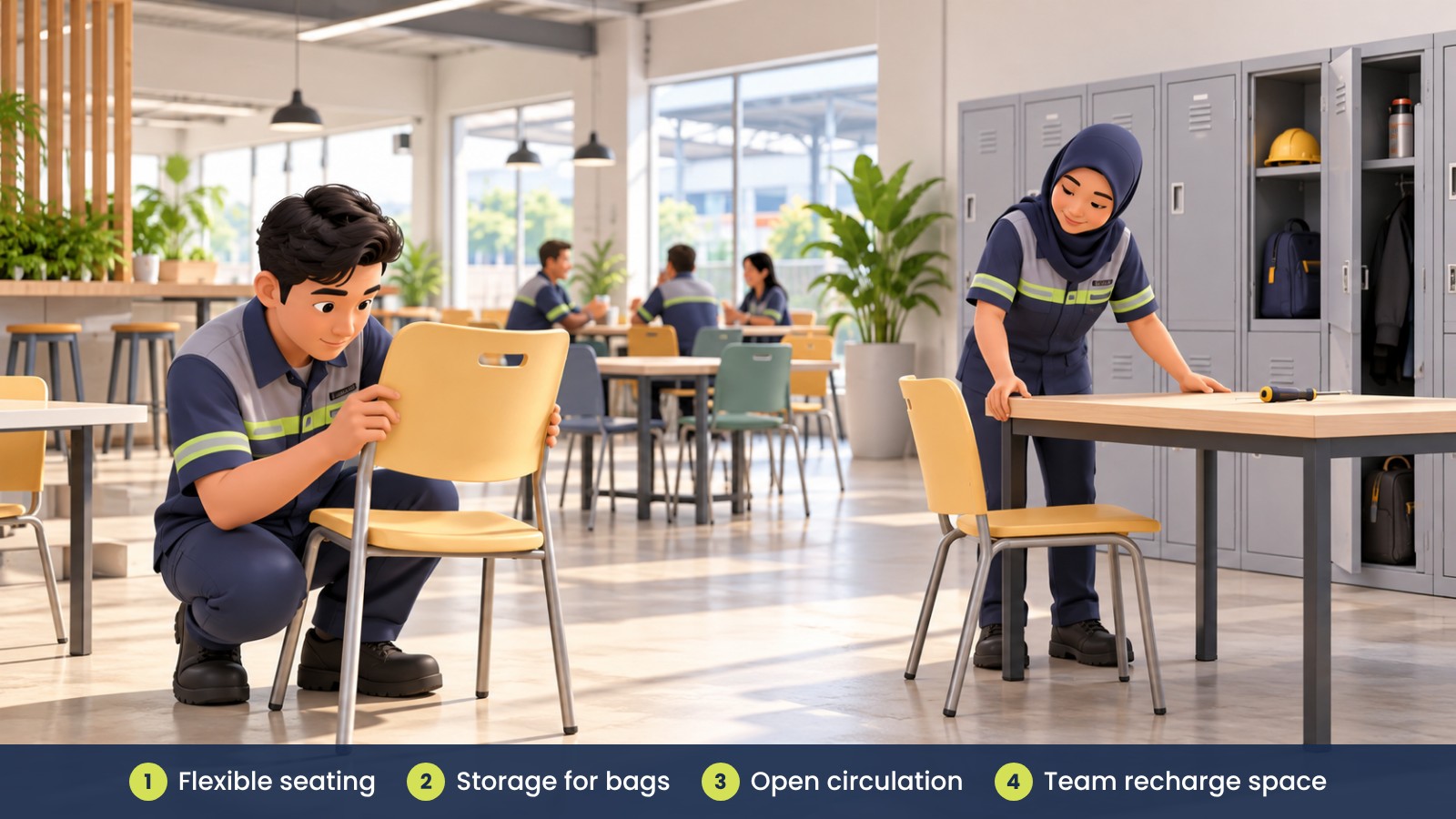
Set a simple process for reporting loose, damaged or unstable furniture so it can be checked. Regularly review the condition of chairs, tables and storage, especially where many people use shared furniture.
Do not add more tables than the space can comfortably accommodate. An overfilled room can make it harder to move chairs and keep the area organised.
How can layout and storage support everyday use?
Keep the route from the entrance to seating and serving areas easy to follow. Group furniture in a way that allows people to use the room without blocking shared access.
If employees bring personal items, decide where those items should go. Lockers or designated storage can keep bags and belongings from taking up table space or being left in walkways.
Choose furniture that can be rearranged if the use of the room changes. Lightweight or modular pieces may help a facilities team adjust the arrangement, provided they are suitable for the intended use.
| Planning check |
What to consider |
Helpful action |
| Busy periods |
When and how groups use the room |
Observe the routine before setting the layout |
| Furniture condition |
Loose joints, damage or wear |
Arrange checks and repairs when needed |
| Personal items |
Where bags and belongings are placed |
Provide suitable storage if required |
| Room flexibility |
Whether use or group sizes may change |
Consider rearrangeable furniture |
What are common break room furniture mistakes?
- Choosing furniture before observing how employees use the room.
- Fitting too many tables and chairs into the available space.
- Overlooking personal storage and the location of serving areas.
- Choosing furniture without checking care and maintenance guidance.
- Replacing all furniture without checking whether suitable items can be repaired or reused.
What could this look like at a Penang factory?
Fictional example: A factory team in Batu Kawan reviews a shared canteen used by employees from different shifts. The facilities team observes how people enter, collect meals, sit and leave before changing the furniture plan.
It keeps suitable tables, replaces a few chairs that need attention and adjusts the arrangement to make the serving route easier to use. The team also adds a designated place for personal belongings.
Lower-carbon choices for your break room
- Check whether suitable tables and chairs can be repaired or reused before replacing them.
- Consider modular or rearrangeable furniture if the room’s use may change.
- Choose durable furniture suited to the way the canteen is used, and ask about available repair parts.
- Order the quantity the space and staff routine call for, rather than filling every available area.
- Ask suppliers for product-specific material information and documents that apply to the exact furniture selected.
- Ask whether take-back, resale, donation or recycling options are available and confirm how they work.
For more on furniture materials, life-cycle stages and buyer questions, see Office Furniture Carbon Footprint: A Practical Buyer’s Guide.
What can go wrong?
If the furniture does not suit the room or its routines, staff may find it harder to use the space comfortably and keep it organised. Overbuying can crowd the room, while replacing suitable furniture too soon may create avoidable cost and waste. Observing how the room is used helps guide practical decisions.
How can iGreen help?
iGreen Office Furniture can help plan break rooms and canteens, select practical tables, chairs and storage, and coordinate delivery and installation. Services are available in Kuala Lumpur and Penang.
Contact iGreen Office Furniture to discuss your factory break room or canteen.
Frequently asked questions
What furniture is suitable for a factory canteen?
Choose tables, chairs and storage based on the room, the people using it and how the space is maintained. Check dimensions and care guidance for the items you select.
How should we plan furniture for different shifts?
Observe how employees use the room at different times, then arrange tables, chairs and serving areas to suit those routines.
Where can I find office furniture in Penang for a factory break room?
Compare furniture suppliers based on suitable product options, delivery access, installation arrangements and after-sales support for your site.
Should we replace all the old canteen furniture?
Not automatically. Check the condition of each item and consider repair, reuse or replacement based on its suitability and condition.
Prepared by iGreen Office Furniture