This article is general guidance, not legal advice.
Built-in furniture can suit parts of an office you expect to keep for a long time, while loose or modular furniture is often easier to move, change or add to. The right choice depends on how long you expect to use the space, how your team may grow and what your tenancy agreement allows.
Key Takeaways
- Plan fixed works such as walls, ceilings, flooring and mechanical and electrical services as part of the renovation.
- Use built-in furniture where a permanent fit is useful and the space is unlikely to change.
- Loose and modular furniture can be easier to dismantle, reuse and reconfigure.
- Check your tenancy agreement before installing items attached to the unit.
- Compare the full use of each option, including access, storage, future changes and removal.
The 2-minute version
- List what needs to be fixed: identify walls, ceilings, flooring, lighting and service changes.
- List what may change: consider desks, chairs, storage, meeting tables and team areas.
- Check the space: measure, review access and discuss any alterations with building management.
- Compare options: weigh built-in furniture against loose or modular pieces for each area.
- Plan for later: consider how items can be added, moved, dismantled or reused.
What is the difference between built-in and loose office furniture?
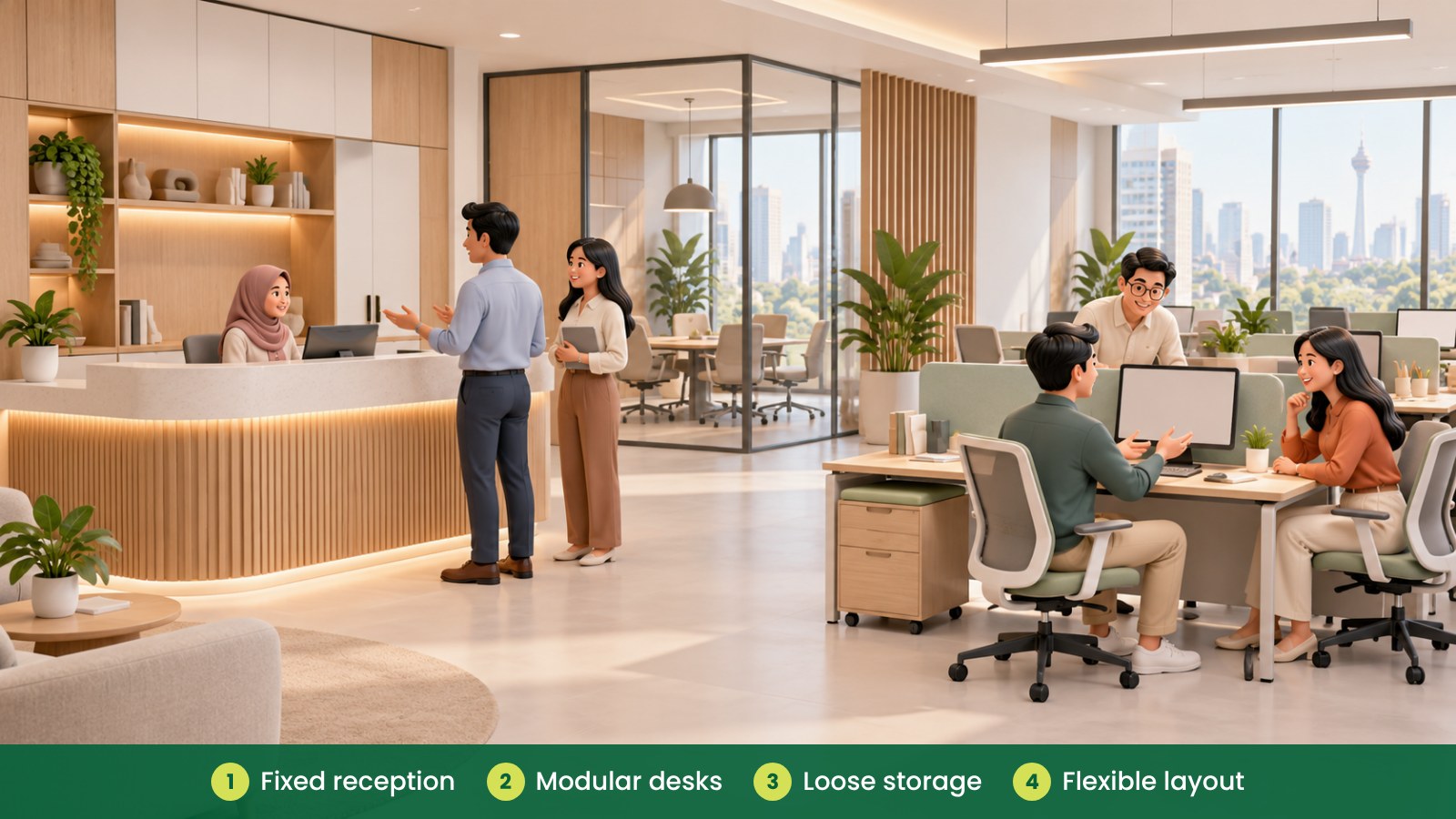
Built-in furniture is designed to fit a particular part of a room and may be fixed to walls, floors or other building elements. Examples include a custom reception counter, wall-to-wall cabinetry or a fixed bench along a wall.
Loose furniture is separate from the building. Desks, chairs, cabinets and meeting tables can usually be moved without altering the unit. Modular furniture is made of components that can be rearranged, extended or reduced to suit a new layout.
Some projects use both. Fixed works such as partitions, ceiling changes, flooring and mechanical and electrical services belong in the renovation plan. Furniture that may move or change can be planned separately as loose or modular furniture.
When does built-in furniture make sense?
Built-in furniture can make sense when you want a permanent fit for a specific area, such as a reception point or a fixed storage wall. It can help use an awkward corner or provide a consistent finish where the layout is expected to remain stable.
Before choosing it, consider what happens if the team grows, the room changes purpose or the tenancy ends. Ask how the item will be fixed, what approvals are needed and whether it can be removed without affecting the unit.
When is loose or modular furniture a better fit?
Loose and modular furniture often suits rented offices, teams that may grow and workplaces that need to change over time. Workstations can be rearranged, storage can be moved and compatible components may be reused in another office.
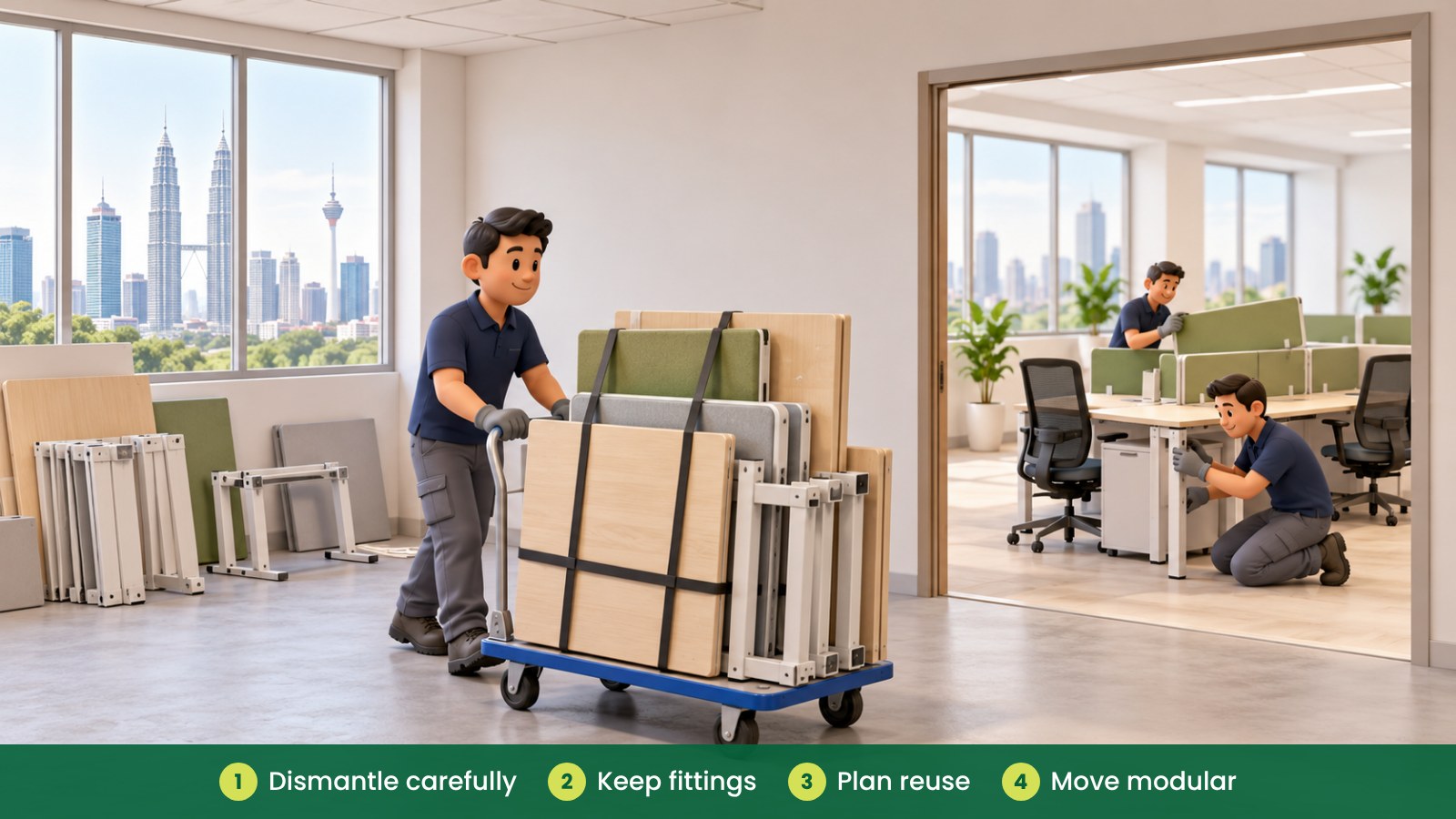
Check measurements and access before buying. A movable cabinet is only useful if it fits the new space and can pass through the route to get there. Keep assembly information and related parts together if furniture may need to be dismantled.
| Option |
Potential advantages |
Things to consider |
| Built-in furniture |
Tailored fit; can use specific wall or corner space; may suit a stable, permanent function |
May be harder to move; can require more planning for alterations and reinstatement; changes may affect adjoining finishes |
| Loose furniture |
Can be moved; easier to reuse in another room; can be replaced in stages |
Needs suitable storage and circulation space; must be measured for the room and access route |
| Modular furniture |
Components can be rearranged or added; supports phased changes; may be dismantled and reused |
Check that components work together and that future additions can match the system |
How should you decide for each office area?
Choose furniture by function rather than applying one solution across the whole office. A reception counter may need a specific fit, while staff workstations may need to change as the team grows.
| Office area |
Questions to ask |
Option to consider |
| Reception |
Is the position permanent? Does the counter need to fit a particular entrance? |
Built-in or loose, depending on the layout and future plans |
| Staff workstations |
Could the team grow or change its seating arrangement? |
Loose or modular desks and storage |
| Meeting area |
Will the room host different group sizes? |
Loose tables and chairs that can be rearranged |
| Storage |
Does the team need to move files or supplies between rooms? |
Loose cabinets or modular storage |
What should you check before installing built-in items?
Check the tenancy agreement and ask building management about any required approvals before work starts. Share the proposed layout and details of what will be fixed to the unit with the relevant project team.
Agree how the item will be accessed for maintenance and what should happen if the office layout changes. Keep drawings, approval records and handover information so the next move or renovation is easier to plan.
What are common mistakes when choosing office furniture?
- Making every item fixed before considering how the team might change.
- Choosing loose furniture without checking dimensions, access or where it will go.
- Assuming a built-in item can be removed without affecting walls, floors or nearby finishes.
- Leaving furniture decisions until after renovation work has fixed the layout.
- Discarding modular furniture without checking whether it can be reused or reconfigured.
What could this look like for a Malaysian SME?
Fictional example: A company moving into a rented Kuala Lumpur office wants a reception area, more staff desks and extra storage. It chooses a counter suited to the entrance, but keeps workstations and cabinets as modular furniture.
Later, the team adds staff and rearranges some desks without changing the fixed areas. When the company reviews another office, it can check which furniture can be dismantled and reused.
How do renovation and furniture plans fit together?
Coordinate the furniture layout with the renovation plan early. The layout can help the project team plan fixed works, while early furniture decisions help confirm quantities, locations and access needs before delivery and installation.
For a simple view of the stages from brief to handover, see the office fit-out project timeline.
Prepared by iGreen Office Furniture
What can go wrong?
Furniture that is fixed without considering future changes may be harder to remove or take to a new office. A team may also find it harder to add staff or change a room’s purpose. Planning fixed works and movable furniture together helps keep options open.
How can iGreen help?
iGreen Office Furniture can help with space planning, loose and modular office furniture, delivery and installation, and dismantling or relocating existing furniture. We can also help re-layout an office when your team grows. Services are available in Kuala Lumpur and Penang.
Contact iGreen Office Furniture to discuss your office plan.